
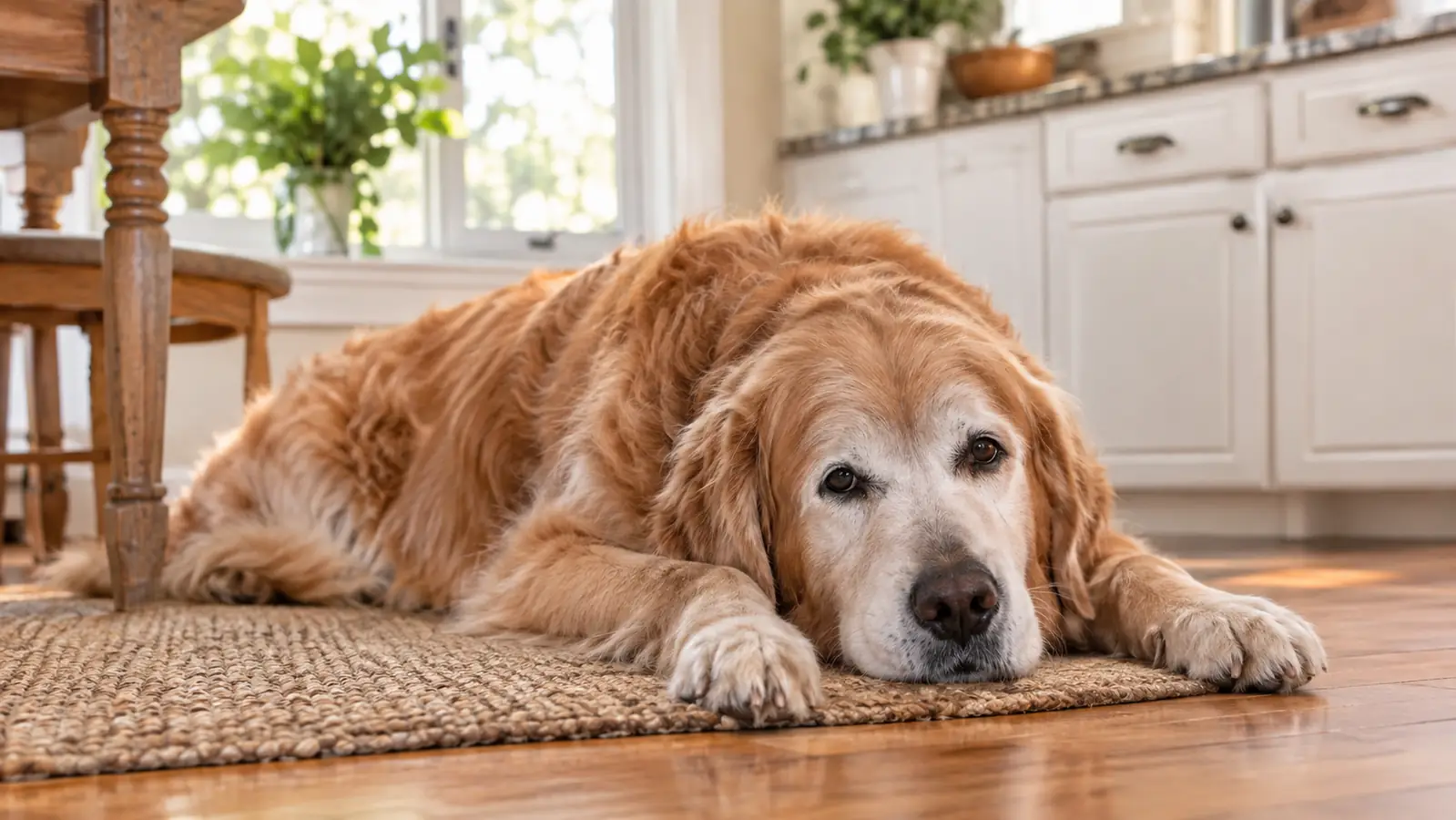
I noticed it in the kitchen first. Biscuit would stop at the edge of the hardwood, front paws on the floor and back paws still on the rug, working himself up to the crossing. He is a 12-year-old Golden Retriever, 68 pounds, diagnosed with mild hip arthritis at 10. For two years I did what most people do. I waited to see whether it would pass. Then I bought a cheap glucosamine chew at the warehouse store. Then I quit buying it, because I could not tell whether it was doing anything.
That last part is the real problem, which is why I wrote this down. Stiffness in an older dog moves slowly, and a supplement that works slowly is easy to abandon. What changed things here was not one clever purchase. It was a process: a diagnosis from our vet, a chew matched to Biscuit's weight, the same time every morning, and a notebook I could look at instead of trusting my memory. The chew we settled on is the Dasuquin MSM soft chew for large dogs from Nutramax Laboratories. The steps below are the ones that made it work. Skip them and you are simply buying chews.
The Bag Sized for a 68-Pound Dog, Not a 12-Pound One
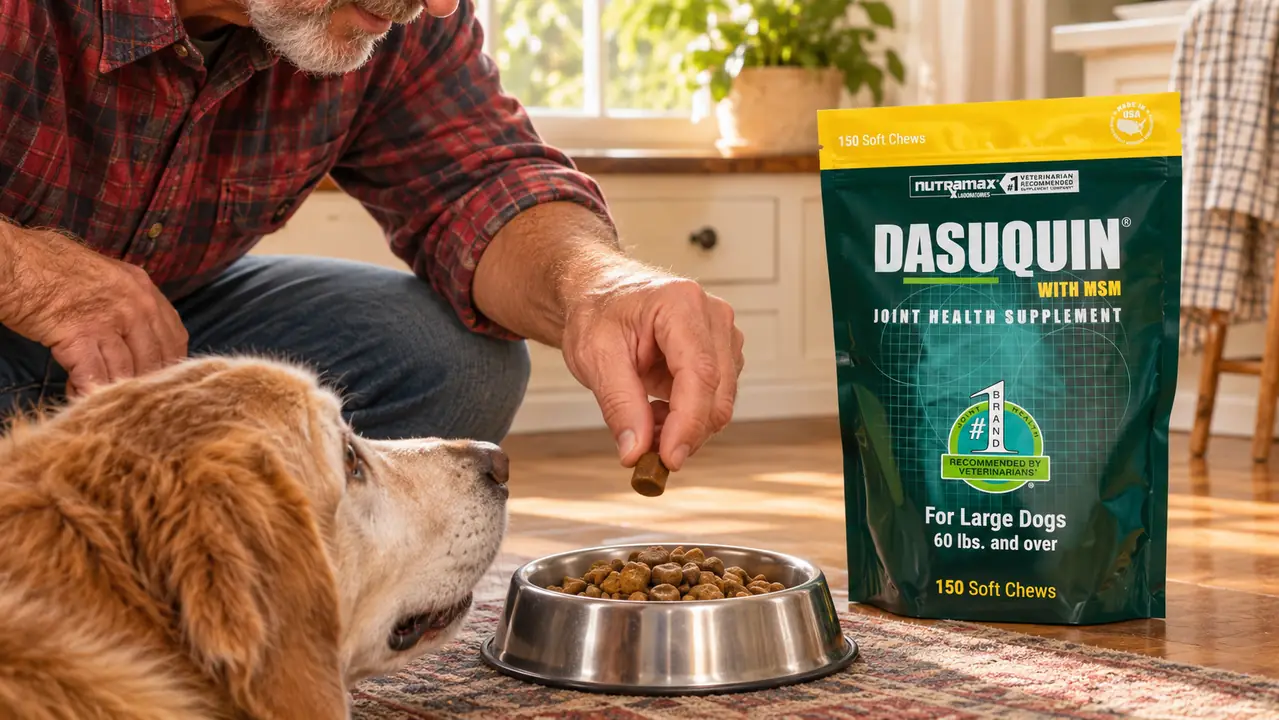
Dasuquin MSM for large dogs is a beef-flavored soft chew, 150 to a bag, with glucosamine hydrochloride at 900 mg and MSM at 800 mg among the listed active ingredients. Soft chews are easy to give and hard to forget.
Amazon Check Today's Price on Amazon →Step 1: Get a Diagnosis Before You Buy a Single Chew
Start with the vet, not the website. A stiff back end in a 12-year-old dog is not automatically arthritis, and it is not automatically something a supplement can help. Our vet went over Biscuit's hips and knees, watched him walk across the parking lot, and asked when the stiffness was worst. Mornings and the hour after a long nap, I said. That pattern is a hip pattern. A dog that is stiff all day, or that suddenly will not put a paw down, needs a different conversation than the one on this page.
The other reason to go first is that your vet needs the whole list. Bring what you already give, including the cheap chew you bought and stopped, any prescription medication, and anything for allergies. Biscuit takes nothing else, which made this simpler for us. If your dog is on other medication, the answer may be that a joint supplement is fine, or it may be that the timing needs adjusting. Better to know that before you open a bag of 150.
One more thing I would say plainly, because I had to hear it myself. A joint supplement supports a joint. It does not treat arthritis and it does not replace anything your vet prescribes. If you are expecting the chew to be the whole plan, it will disappoint you. Our vet framed it as one part of a larger routine, and that framing turned out to be the most useful sentence of the appointment.
Step 2: Match the Formula and the Size to Your Dog
Dasuquin comes in more than one version, and the differences are not cosmetic. We buy the large dog formula because Biscuit is 68 pounds. Handing a big dog the small dog version means feeding him a fraction of what the product is built to deliver. The label on our bag lists glucosamine hydrochloride 99% at 900 mg and methylsulfonylmethane, MSM, at 800 mg, along with sodium chondroitin and the avocado and soybean unsaponifiables the company calls ASU.
The ASU is the part that moved me off the plain glucosamine chews I had been buying. It is what Nutramax Laboratories builds this product around, and the label says so directly: Dasuquin goes beyond standard glucosamine supplements with avocado and soybean unsaponifiables. I am not a chemist and I cannot tell you how much difference that makes on its own. I can tell you the company has been making pet supplements for more than 25 years, and that this is the version our vet nodded at when I read the ingredients off my phone in the exam room.
Two label details are worth checking against your own dog. The chews are beef flavored, which matters if your dog turns his nose up at anything that is not actual beef, or if he has a beef sensitivity. And the allergen line reads crab free, which matters because a lot of chondroitin comes from shellfish sources. Biscuit has no food issues, so neither was a deciding factor here, but I read them anyway. It takes thirty seconds and it is the difference between a useful purchase and a bag that sits in the pantry.
Step 3: Pick One Time of Day and Never Miss It
This is the step people skip, and it is the one that decides whether you get anything out of the bag. I give Biscuit his chew first thing, right after he comes in from the yard, before the coffee goes on. The bag sits next to the kettle so I cannot walk past it. Tom does it on the mornings I sleep in, and he does it the same way, because our vet confirmed the count for Biscuit's weight and I wrote that number on the lid in marker.
Soft chews make this easier than pills. Biscuit is a Golden Retriever, which is another way of saying he will eat almost anything, but he has gotten pickier about tablets as he has aged, and a beef soft chew does not need to be hidden in peanut butter or wrapped in cheese. He takes it as a treat and then looks for a second one. The bag holds 150, so this is a supply you are committing to, not a two-week sample you can quietly drop the first week you get busy.
Consistency is doing the actual work. Joint supplements are not painkillers. You will not see a change in an afternoon, and if you give it four days on and three days off you will never learn whether it helps. Pick a time, tie it to something you already do without thinking, and let it run.
Step 4: Give It 90 Days and Write Down What You See
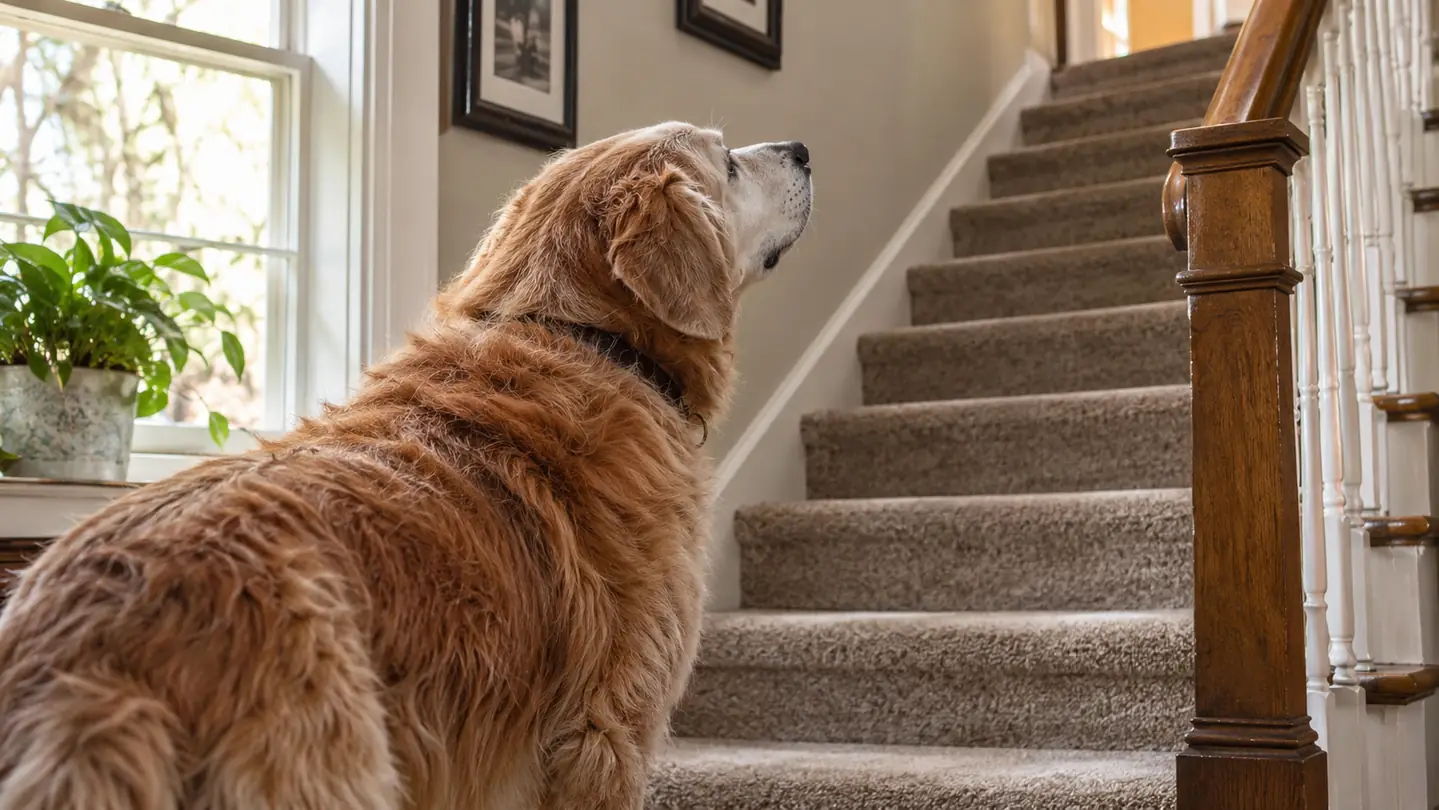
Memory is useless for this. I started a page in the back of a notebook with a line for each week: how Biscuit got up in the morning, whether he took the stairs or waited at the bottom, whether he crossed the kitchen without pausing. It took ten seconds a day. What it gave me was a record that did not flatter the product and did not punish it either.
What improvement actually looked like, honestly: by about week six, the pause at the kitchen threshold was shorter. Not gone. Shorter. By week ten he was getting up from his bed on the first try more often than the third. He still takes the stairs one at a time, and he still hesitates at the back of the Subaru on cold mornings. Nobody in this house is running anywhere. But the direction changed, and I could see it on the page instead of arguing with myself about whether I was imagining it.
Set the window at 90 days before you start, so you are not deciding with your feelings in week two. If nothing has changed at all in three months, the honest answer is that this chew is not doing much for your dog, and you should say so to your vet rather than reordering out of habit. That is not a knock on the product. It is exactly what happened with the warehouse chew I tried first, and I wish I had stopped that one sooner instead of letting it sit in the cupboard for a year.
Step 5: Fix the Floor While You Wait
While the chews were doing their slow work, I changed the house, and I think the combination is why the difference was noticeable. Biscuit's worst surface was the hardwood between the kitchen rug and the hallway. We put down a carpet runner. It is not pretty and it does not match anything. He uses it every single time now.
The other two spots were the deck and the car. There are three steps down from the back deck to the yard, and he had started standing at the top of them, calculating. Tom built a low ramp to one side. For the Subaru Outback we bought a folding ramp that lives behind the passenger seat. He was skeptical for about a week and then walked up it like he had always done it.
None of this is complicated or technical. It is a runner, a ramp, and a rule that Biscuit does not do the stairs at speed anymore. If I had done only the floor and skipped the chew, I would probably still be where I was two years ago. If I had done only the chew and left the hardwood bare, I think he would be stiffer than he is.
What Else Helps
Weight is the one nobody wants to hear. Biscuit was 74 pounds at his worst and is 68 now, and every one of those six pounds came off with measured food and fewer biscuits, not with more walks. Our vet was direct about it: less weight on a sore hip does more than most things you can buy. If your dog is carrying extra weight, that is the first lever and it does not cost anything.
Muscle matters too. Short, frequent walks on flat ground do more for a stiff dog than one long weekend hike, and a walk that ends before he is exhausted is a walk you can repeat tomorrow. Our vet showed me a few range of motion exercises to do on the rug, about five minutes, twice a day. Biscuit tolerates them. He does not enjoy them.
Keep the rechecks. Biscuit goes in twice a year now. If the stiffness gets worse in a way the chew and the runner cannot cover, our vet has other options and some of them are prescription. A supplement is one line in a plan, not the plan. If your dog stops eating, starts limping on a different leg, or cannot settle at night, that is a phone call, not a change of chew.
By week six the pause at the kitchen threshold was shorter. Not gone. Shorter. That was the whole result, and it was enough to keep going.
The Bag We Reorder, Not the One We Abandon
150 beef-flavored soft chews, large dog formula, from Nutramax Laboratories. It is not fast and it is not a cure. It is the one thing in Biscuit's morning routine I would not drop.
Amazon Check Today's Price on Amazon →