
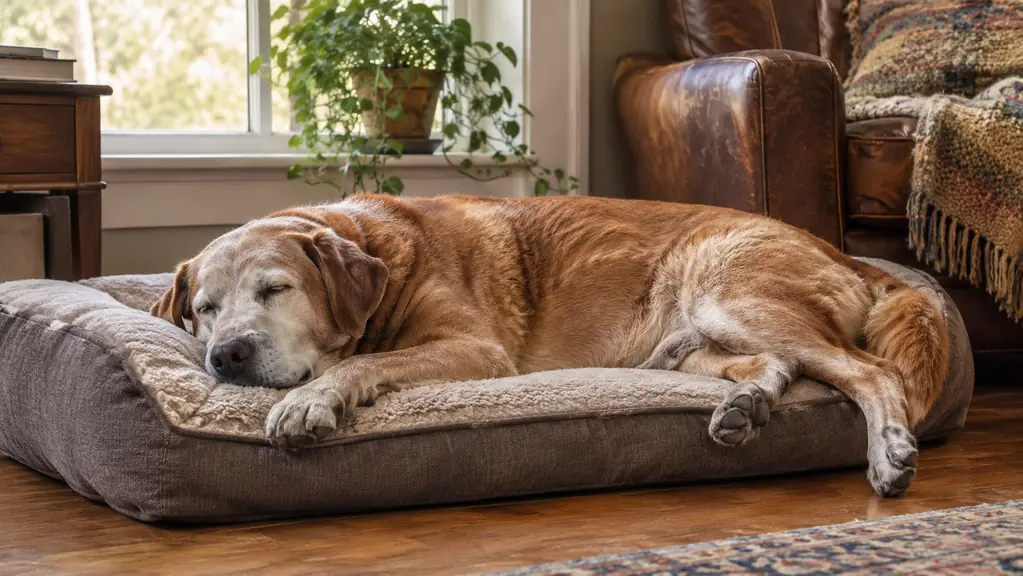
For two years Biscuit slept on a folded quilt at the foot of our bed. He is twelve, a golden retriever, sixty-eight pounds, and he has mild hip arthritis that our vet found when he was ten. Every night he walked a slow circle on that quilt. Down, up, circle, down again.
Mornings were worse. He pushed himself up in stages, front legs first, then a long pause, then the back end. At the top of our carpeted stairs he would look down the steps, look back at me, and wait to be told it was fine.
I tried the obvious things first. A flat crate pad. A doubled quilt. The egg crate topper off the guest bed, folded in half, which I am not proud of. Each one helped for about a week, then flattened under him, or slid across the hardwood every time he stepped on it, or left his back legs hanging off the end.
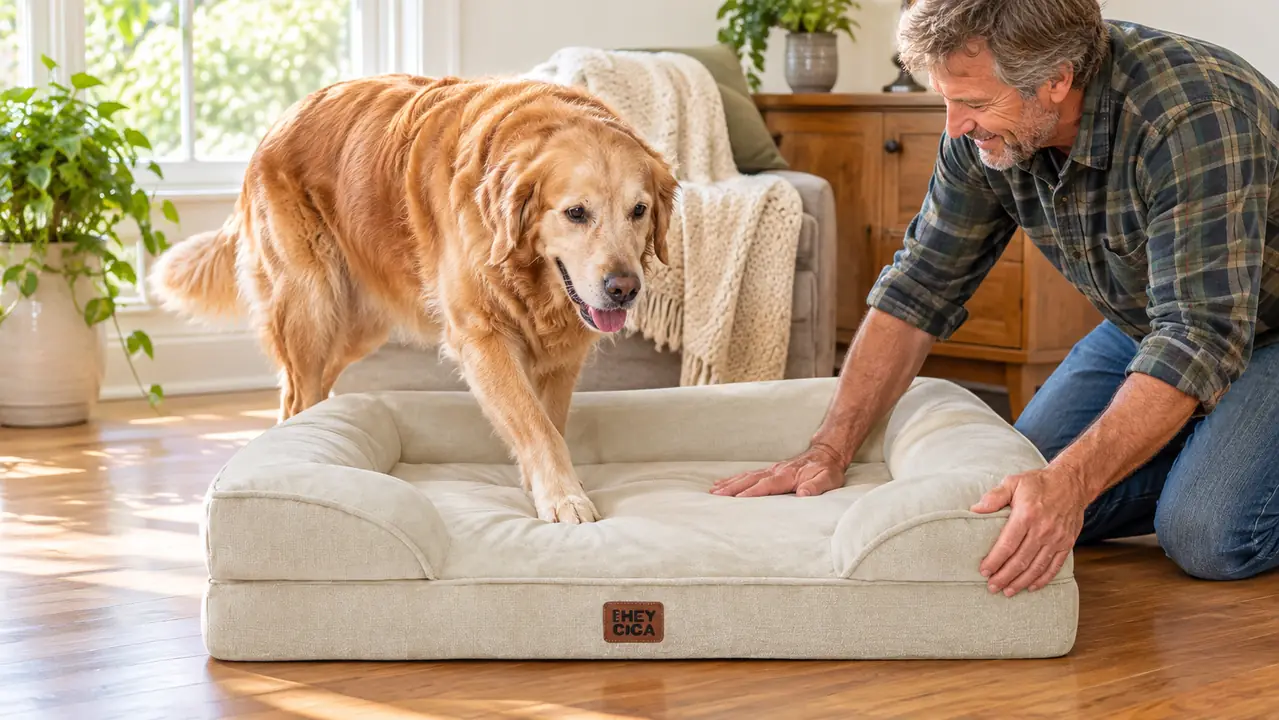
That is when I ordered the EHEYCIGA orthopedic bed in the extra large size, 44 by 32 inches, which is a lot of bed and was not a decision I made quickly. I want to be honest about what I expected, which was not much. Our vet had been plain with me. Biscuit has mild hip arthritis and no bed treats that. What a bed can do is spread a dog's weight instead of letting it press into the same two spots, and give him a reason to lie down instead of pacing. That was the assignment. Not fixing him. Making lying down easier.
Twelve nights in, the circling stopped. He walked to the bed, stepped up, turned around once, and was asleep in under a minute.
The bed that ended the bedtime shuffle at our house
Memory foam over egg crate foam, three bolsters for the head and neck, a waterproof layer between the fleece surface and the bottom fabric, and a non-skid underside that stays put on hardwood. Sized for dogs up to 100 pounds.
Amazon Check Today's Price on Amazon →The box looked far too small for a 44 inch bed, and it was, because the bed arrives vacuum packed. The instructions say to let it expand for 24 to 48 hours after unpacking, and they are not exaggerating. I opened it on a Tuesday afternoon and set it on the living room floor. By Thursday morning it stood at its full 6.5 inches, 44 long and 32 wide, and it has held that shape since.
What is inside it matters more than what it looks like. Memory foam sits on top of egg crate foam, which is why it holds a big dog up without feeling like a board. A waterproof film runs between the fleece surface and the bottom fabric, so a tipped water bowl or an upset stomach does not soak down into the foam. Three bolsters run along the back and both sides. The underside is non-skid. The EHEYCIGA bed weighs about 4.41 pounds, light enough for me to drag from the living room to the bedroom, and it is rated for dogs up to 100 pounds. Biscuit is 68.
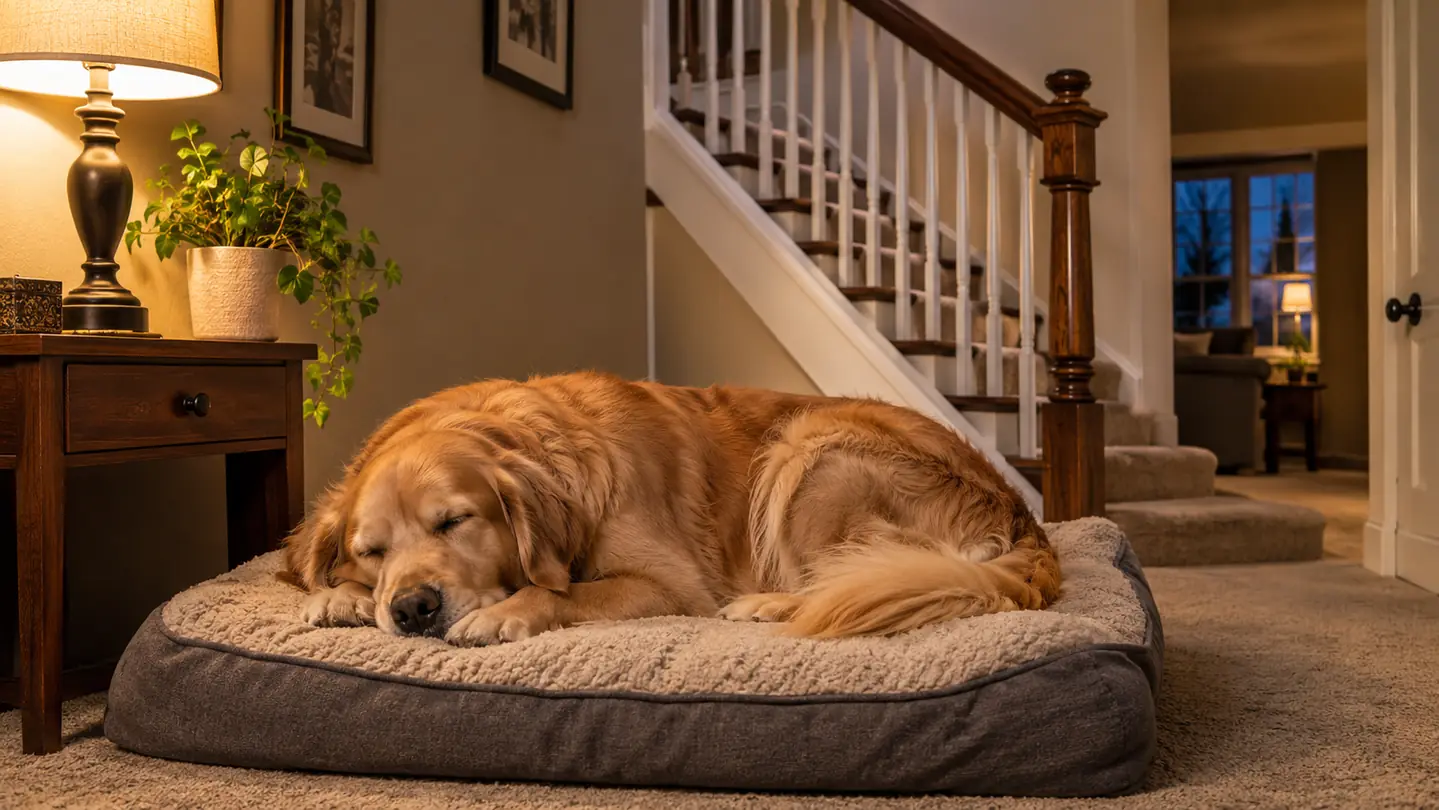
The first two days were humbling. Biscuit walked straight past the bed and lay down on the quilt beside it. Twice. Tom put an old cardigan of mine on it, and on day four Biscuit stepped up, turned around once, and stayed. He has not used the quilt since. The bolsters turned out to matter more than I expected. He is a head-down sleeper and he tucks his chin over the front one. He still gets up in stages in the morning, but he no longer stands there frozen the way he used to. That is not the bed treating arthritis. It is a dog who is not starting the day stiff from sleeping badly.
Two details I would have paid more attention to if someone had mentioned them. The first is the non-skid bottom. Our floors are original hardwood and everything slides on them. The quilt slid. The crate pad slid. This bed stays where it is put, even when a sixty-eight pound dog pushes off it to stand up. The second is washing. Biscuit had a rough stomach week in February, the kind that ruins a bed for good. The waterproof layer kept it out of the foam, the cover came off and went through the wash, and the bed survived. Getting that cover back on is easier with two people, so plan for fifteen minutes and a helper.
What it did not do. It did not fix the stairs. He still hesitates at the top of them and still waits for me to go first, and a bed is not a ramp so I will not pretend otherwise. It is also firmer than a dog who likes to sink into a pillow might want. At 44 inches it takes up real floor space, and I measured twice before I moved the reading chair out of the way. If your dog is smaller than Biscuit, measure them stretched out asleep before you order this size, because a big dog on a too-small bed is exactly the problem I was trying to get away from.
What I'd Tell You If We Were Sitting at My Kitchen Table
Ask your vet what you are actually dealing with before you buy anything. Mild arthritis, a soft tissue strain, and a knee that needs surgery can all look like a slow morning, and only an exam sorts them out. A bed supports a dog. It does not treat a diagnosis, and anyone who tells you otherwise is selling something else. Then measure your dog while they are flat out asleep, nose to tail, and add a few inches, because they sprawl more than you think. Then give the bed the full 48 hours to expand and give your dog a full week to decide. Biscuit ignored his EHEYCIGA bed for four days, and if I had moved it to the basement on day two I would have missed the entire point. Put something that smells like you on it for the first few nights. It helps. And if your dog is struggling on the stairs or getting into the back of the car, understand that a bed is not going to touch either of those, so talk to your vet about that separately and budget for it separately. We bought a bed. It made lying down easier. In a house with an old dog in it, that turned out to be worth a great deal.
Four months in, the quilt is still in the linen closet
He sleeps through the night, he gets up easier in the morning, and he has not circled once since November. That is the whole review.
Amazon Check Today's Price on Amazon →