
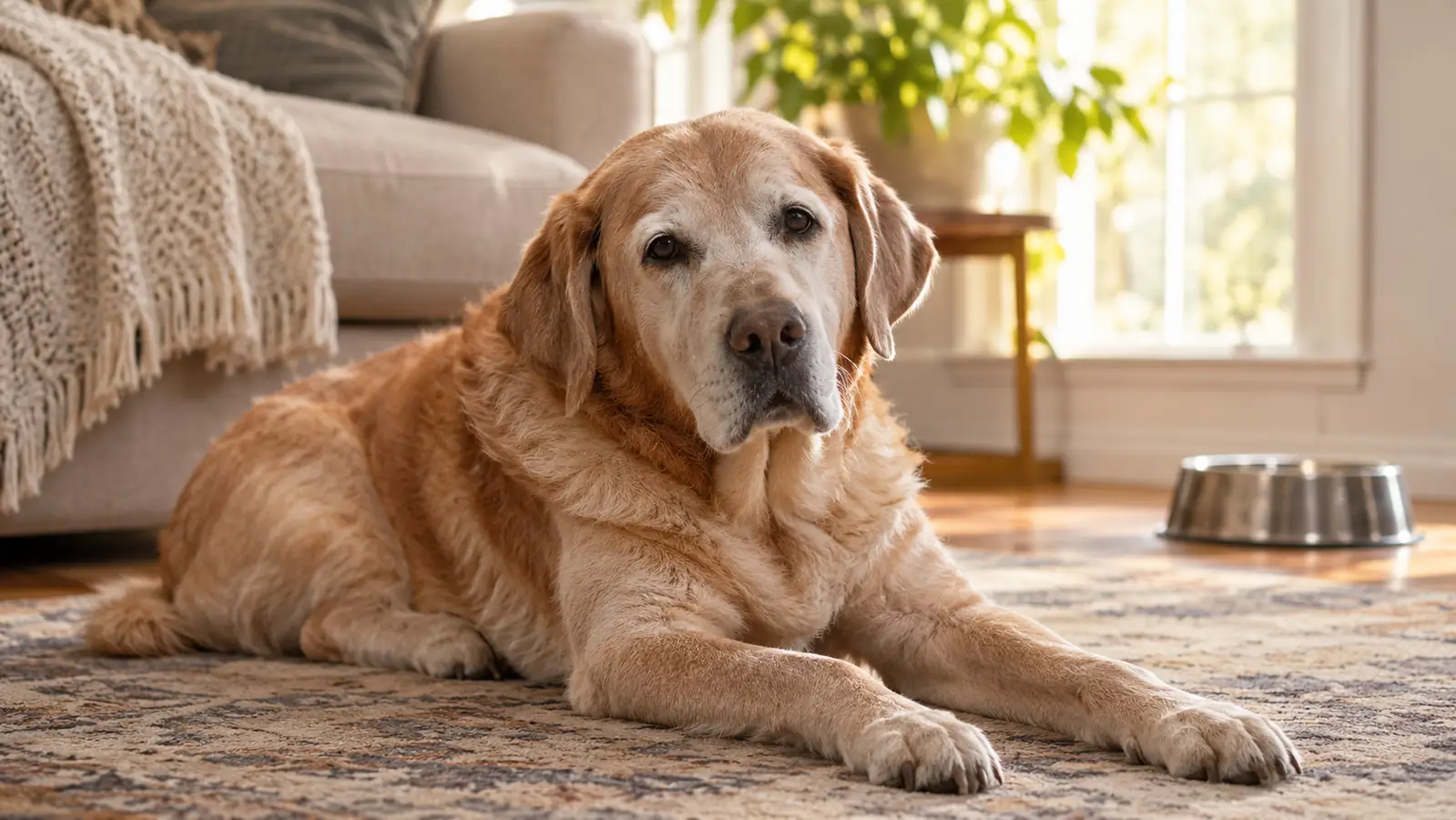
Short answer: for Biscuit, our 12-year-old Golden Retriever, the EHEYCIGA orthopedic bed has been the better choice for stiff mornings. He is about 68 pounds and was diagnosed with mild hip arthritis at 10. The EHEYCIGA uses memory foam and egg crate foam, and that combination gives him more even support than the flat foam bed he used before. A standard foam bed is not a bad bed. It is just less helpful for a large senior dog who needs a softer landing when he lies down and a little more help when he pushes back up.
I compared the two in our Asheville house over several weeks. I put the EHEYCIGA on the hardwood floor in the den, then beside our bed upstairs. I looked at support, waterproofing, cleanup, sizing, and how Biscuit actually used each bed. I am not a vet, and this is not medical advice. Our vet diagnosed the arthritis and guides how we manage it. A bed can make rest easier. It does not treat arthritis.
| EHEYCIGA orthopedic bed | Standard foam bed | |
|---|---|---|
| Support for stiff hips | Memory foam plus egg crate foam spreads weight and eases pressure points | One layer of standard foam, often firmer and less contouring |
| Waterproofing | Waterproof film between the fleece surface and bottom fabric | Cover may resist spills, but the foam core is not protected the same way |
| Bolsters | Three-sided bolsters support neck and head | Usually flat or lightly bolstered |
| Cleanup | Waterproof design and washable construction | Cover may wash, but foam can hold moisture and odor |
| Sizing | 44 by 32 by 6.5 inches, extra large, rated to 100 pounds | Varies by bed; many standard beds offer less thickness |
| Upfront cost | Higher upfront cost than a basic foam bed | Lower upfront cost |
| Ready to use | Needs 24 to 48 hours to expand after unpacking | Usually ready as soon as it is unfolded |
| Firmness | Contours more, which some dogs resist | Firmer flat surface, easier for some dogs to push up from |
| Staying put | Non skid bottom | Varies; some covers slide on hardwood |
How I Compared Them
Biscuit is a 68-pound Golden Retriever, and at 12 he is slowest in the morning and after a long nap. He started hesitating at the stairs and at the back of the Subaru Outback around age 10. That history matters because a bed for a senior dog is not just a place to sleep. It is the place where he lands, turns around, and pushes back up.
The standard foam bed in this comparison is the flat foam bed Biscuit used before. It had one layer of foam and a simple cover. It was fine when he was younger. As his hips got stiffer, I noticed he would circle more before lying down, and he sometimes needed a moment to get his back legs under him when he got up. The EHEYCIGA has memory foam and egg crate foam, plus three-sided bolsters. I wanted to see whether those details made a real difference in how he settled.
Here is the part I did not expect. For the first week I kept both beds down in the den, side by side, about a foot apart. The flat foam bed was the one he had used for years. The EHEYCIGA was new and smelled like a cardboard box. For the first two days he used the old bed out of habit. By the fourth day he was stepping onto the new one without being coaxed, and by the end of the week I carried the old bed out to the garage. I did not think a 12-year-old dog would change his mind that fast.
I did not run a lab test. I watched him. I noted how long it took him to lie down, whether he shifted a lot, and how he got up after a nap. I also checked the bed's size in our room, because a bed that is too big for the space is just an obstacle. Finally, I cleaned both beds the way I would in normal life. That is the comparison.
What Changed for Biscuit
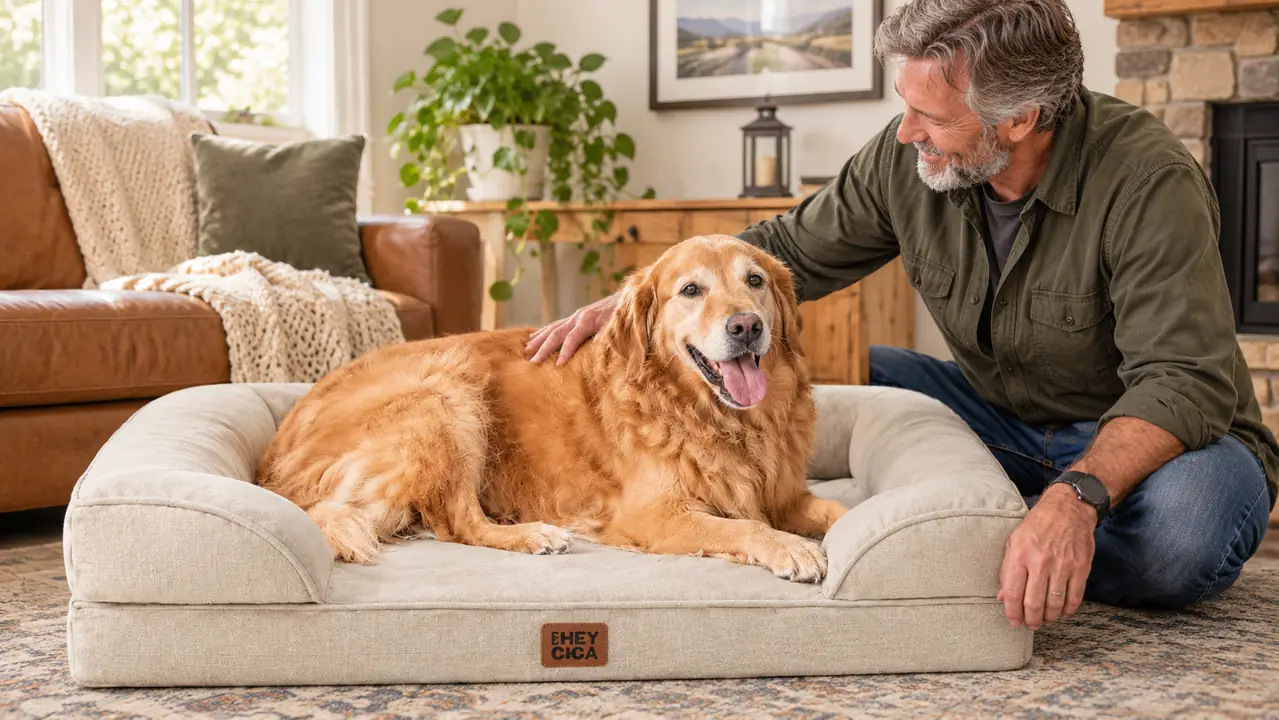
On the flat foam bed, Biscuit would sometimes stand at the edge and look at it before lying down. On the EHEYCIGA, he stepped in and settled faster. I am not going to say the bed cured him. He still has stiff days. But the extra thickness and the bolsters gave him a place to lean his head and a softer surface under his hips.
The biggest difference showed up after a nap. Before, he would push up in stages. With the EHEYCIGA, he still takes his time, but he seems to get his back legs under him with less scrambling. I think the memory foam and egg crate foam spread his weight more evenly than the flat foam did. That is my observation, not a medical finding.
One morning in February stands out. It was cold, the kind of cold that gets into the floorboards of an old house, and he had slept hard for close to two hours. On the flat foam bed that winter he got up in stages: front legs first, then a pause long enough that I almost went over to help, then the back legs. The same week, later in the day, he got up off the EHEYCIGA in one motion. Not fast. But one motion. I wrote it on the kitchen calendar because I did not trust my memory to be fair about it.
The waterproof film mattered more than I expected. Biscuit is 12, and accidents happen. The EHEYCIGA has a waterproof film between the fleece surface and the bottom fabric. That means a spill does not go straight into the foam. The standard foam bed did not have that layer. I had to air it out more and worry about odor.
Where EHEYCIGA Wins
EHEYCIGA wins on support for a large senior dog. The bed is 44 by 32 by 6.5 inches and rated for up to 100 pounds. Biscuit is 68 pounds, so he has room to stretch out without hanging off the edge. The memory foam and egg crate foam give him a surface that gives a little under his hips instead of a hard stop. The three-sided bolsters also give him something to lean against, which seems to help him feel settled.
EHEYCIGA also wins on keeping the bed usable. The waterproof film sits between the fleece surface and the bottom fabric. The bed is washable, and the non skid bottom keeps it from sliding when Biscuit steps on it. On our hardwood floor, that matters. A bed that slides is a bed a stiff dog has to chase. This one stayed where I put it. The long-term wear is the part I watch most closely, and so far it has held its shape well.
Where a Standard Foam Bed Wins
A standard foam bed wins on upfront cost. It is usually the cheaper purchase, and if you are buying for a young, healthy dog or a dog who sleeps on the floor half the time, that may be all you need. The EHEYCIGA costs more, and I would not pretend otherwise. For a household on a tight budget, that difference is real.
A standard foam bed also wins on ready to use and firmness. The EHEYCIGA needs 24 to 48 hours to expand after unpacking. A standard foam bed is usually ready as soon as it is unfolded. And some dogs do not like a surface that contours. If your dog prefers a firm, flat bed and pushes up easily, a standard foam bed may be easier for him. Biscuit is not that dog anymore, but I have met dogs who are.
The Bed That Gave Biscuit a Softer Landing
The EHEYCIGA orthopedic bed uses memory foam and egg crate foam, three-sided bolsters, and a waterproof film. It comes in a 44 by 32 inch extra large size and is rated for dogs up to 100 pounds. If your dog is stiff in the hips and needs more support than a flat foam bed, start by checking the size against the space where your dog sleeps.
Amazon See the EHEYCIGA Bed on Amazon →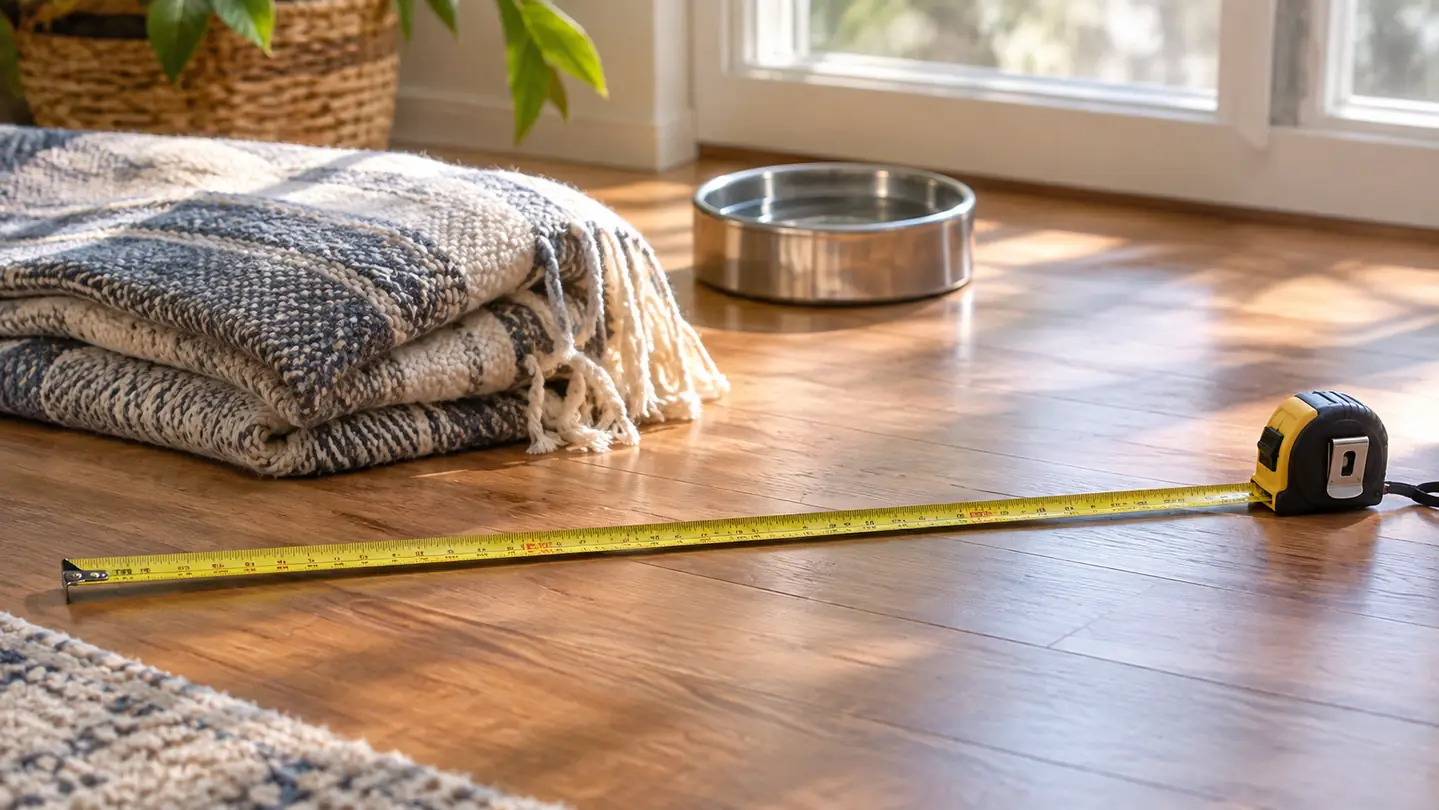
Sizing and Placement in a Two-Story House
I measured the floor space before I ordered. The EHEYCIGA is 44 inches long, 32 inches wide, and 6.5 inches thick. In our den, I put it along the wall where Biscuit likes to nap. It left enough room for Tom and me to walk past. Upstairs, I put it beside our bed on the hardwood floor. The non skid bottom kept it from sliding when Biscuit stepped on it.
I used a cloth tape measure and marked the footprint on the floor with painter's tape before I ordered anything. The gap between the bookcase and the hallway in the den is 58 inches. The EHEYCIGA at 44 inches left 14 inches of walking room, which is enough for Tom to get past with an armload of laundry. In front of the sliding door it did not fit at all, so that spot was out. Measuring first saved me a return and a box on the porch.
The bed weighs 4.41 pounds, so I can move it from room to room without dragging it. That sounds small, but in a two-story house it matters. Biscuit does not do stairs as well as he used to, and he has a carpeted staircase to manage. I keep a bed downstairs during the day and move it upstairs at night when I need to. If your dog is heavier than 100 pounds, this is not the bed for you. That is the limit in the product details.
Care and Cleaning
The EHEYCIGA is waterproof and washable. The waterproof film is between the fleece surface and the bottom fabric. That is the detail that matters when a senior dog has an accident. I spot clean the surface and follow the care instructions for the rest. I do not soak the foam. I also let it air dry fully before putting it back down.
The first real test came on a wet Sunday in March. Biscuit had an accident right on the bed, the kind that would have gone straight into the core of the old foam bed and stayed there. I blotted it up with an old towel and the surface underneath was dry to the touch. That is the waterproof film doing its job. The same thing happened the winter before on the flat foam bed, and I ended up throwing that foam out because I could not get the smell out of it.
The standard foam bed was harder to keep fresh. The cover could be washed, but the foam core could hold moisture and odor. Once that happened, I could not get it back to the way it was. The EHEYCIGA has held up better in that respect. It is not indestructible, and no bed is. But it is easier to live with.
What I'd Still Ask Before Buying
First, measure your dog. Biscuit is 68 pounds, and the 44 by 32 inch bed gives him room to stretch out. A smaller dog may not need that much bed, and a larger dog may need more. Second, think about how your dog gets up. If your dog likes to lean against something, the three-sided bolsters help. If your dog sprawls flat and hates feeling enclosed, a standard foam bed may suit him better.
Third, give the EHEYCIGA 24 to 48 hours to expand after unpacking. Do not judge it straight out of the box. Fourth, ask your vet if your dog's hips are the reason for the stiffness. A bed can make rest easier, but it cannot replace a diagnosis or a treatment plan. I wish I had asked sooner than I did. We manage Biscuit's arthritis with our vet, and the bed is one small part of that.
Who Should Buy Which
Buy the EHEYCIGA if you have a large senior dog who is stiff in the hips, slow to get up, or has started hesitating on stairs. It is also the better choice if accidents are a concern, because of the waterproof film, or if your dog likes to lean his head against a bolster. Biscuit fits that description. The extra support and the washable design have made our days easier.
Buy a standard foam bed if your dog is young, healthy, and gets up easily, or if your dog dislikes a surface that contours. It is also the better choice if the lower upfront cost is the main thing, or if you need a bed that is ready to use right away. If your dog is a heavy chewer, spend your money on a bed made for that instead. No orthopedic bed is chew proof.
If Biscuit Could Pick, He'd Pick the Softer Landing
For a 68-pound senior dog with stiff hips, the EHEYCIGA orthopedic bed has been the better fit in our house. Memory foam and egg crate foam, three-sided bolsters, a waterproof film, and a 44 by 32 inch extra large size. Check the measurements and the 100 pound weight limit before you order.
Amazon See the EHEYCIGA Bed on Amazon →